Showing posts with label Top 100 Books. Show all posts

Wednesday, 19 October 2011

Booker bingo winner is Julian Barnes | Readable, worthy or both?


During BBC2's Newsnight interview he responded to the debate over the quality of this year’s shortlist by saying “Jane Austen – what is she if not readable?”
The Booker isn’t just Bingo, of course, it is a cultural frontline. It is one of the few nationally recognised prizes the truly eggheaded claim to be their own and - like The Proms and Book at Bedtime - they are damn well not about to give it up.
Winterson's argument is heartfelt, if a little bizarre. She has the grump that the Booker chairman this year, Stella Rimginton, is a former head of Britain's spies. She was an odd choice -- Rimington's books are hardly literary. And there were comments by the judges: Susan Hill saying she didn't mind experimentation if it came from genius, Chris Mullin saying books should 'zip along'. For the true literati, these were ominous utterings that bordered on Richard&Judyism.
As if books were meant to be enjoyed! Tsk. You must read a book that makes your head hurt and your stomach churn, otherwise you are just wasting your time and might as well be listening to MoneyBox on Radio Four.
And then of course, so many early favourites didn't make the shortlist. Alan Hollinghurst and Smith were the most notable. Talk of a new Literary Award to rival the Booker grew out of this rebellion -- but don't hold your breath. There is more to mounting a lit award than a few agents and publishers moaning about quality. There's money for one thing.
But ultimately, what use is the Booker?
Below is a list of past winners. I'm struck by how few I've read (reflecting perhaps my chippy northerner habit of not reading what I'm told but reading something else I just fancy the look of). I wonder though how many of them will be considered worthy of consideration ten or fifteen years from now.
One issue I've long had with the Booker, which hasn't been mentioned this year, is the fact it is limited to British and Commonwealth writers. Canadians feature but not Americans. Indians but not French. It is the last bastion of Empire.
For any award that claims to be about what is best in literature this strikes me as a surprising flaw. I can understand limiting it to English language novels... but many of the best writers in the last 20 years have been from the US.

Man Booker prize, complete list of winners

1969 – Something to Answer For, P.H. Newby
1970 – The Elected Member, Bernice Rubens
1971 – In a Free State, V. S. Naipaul
1972 – G, John Berger
1973 – The Siege of Krishnapur, J.G. Farrell
1974 – The Conservationist, Nadine Gordimer
Holiday, Stanley Middleton (shared)
1975 – Heat and Dust, Ruth Prawer Jhabvala
1976 – Savile, David Storey
1977 – Staying On, Paul Scott
1978 – The Sea, the Sea, Iris Murdoch
1979 – Offshore, Penelope Fitzgerald
1980 – Rites of Passage, William Golding
1981 – Midnight’s Children, Salman Rushdie
1982 – Schindler’s Ark, Thomas Keneally
1983 – Life & Times of Michael K, J. M. Coetzee
1984 – Hotel du Lac – Anita Brookner
1985 – The Bone People – Keri Hulme
1986 – The Old Devils, Kingsley Amis
1987 – Moon Tiger, Penelope Lively
1988 – Oscar and Lucinda, Peter Carey
1989 – The Remains of the Day, Kazuo Ishiguro
1990 – Possession: A Romance, A. S. Byatt
1991 – The Famished Road, Ben Okri
1992 – The English Patient, Michael Ondaatje
Sacred Hunger, Barry Unsworth (shared)
1993 – Paddy Clarke Ha Ha Ha, Roddy Doyle
1994 – How late it was, how late, James Kelman
1995 – The Ghost Road, Pat Barker
1996 – Last Orders, Graham Swift
1997 – The God of Small Things, Arundhati Roy
1998 – Amsterdam, Ian McEwan
1999 – Disgrace, J. M. Coetzee
2000 – The Blind Assassin, Margaret Atwood
2001 – True History of the Kelly Gang, Peter Carey
2002 – Life of Pi, Yann Martel
2003 – Vernon God Little, DBC Pierre
2004 – The Line of Beauty, Alan Hollinghurst
2005 – The Sea, John Banville
2006 – The Inheritance of Loss, Kiran Desai
2007 – The Gathering, Anne Enright
2008 – The White Tiger, Aravind Adiga
2009 – Wolf Hall, Hilary Mantel
2010 – The Finkler Question, Howard Jacobson
2011 – The Sense of an Ending, Julian Barnes


BOOKER FACTS:

“Lost Man Booker Prize” – 1970 – Troubles, J. G. Farrell (awarded in 2010 by public
vote to a 1970 novel, as a rules alteration that year meant books published that year were not eligible for the 1970 award)

“Booker of Bookers” awarded in 1993 to 1981 winner (Midnight’s Children, Salman
Rushdie), title of best winner in award’s first 25 years

“The Best of the Booker” awarded by public vote in 2008 to the same book, to
celebrate the award’s 40th anniversary

Peter Carey and J. G. Coetzee are the only authors to have won twice

Three winners have gone onto win the Nobel prize for literature – Nadine Gordimer in
1991, V. S. Naipaul in 2001, J. M. Coetzee in 2003

Several winning books have been made into film adaptations: Schindler’s Ark
(Stephen Spielberg’s Schindler’s List), The Remains of the Day and The English
Patient.

Schindler’s List and The English Patient both went onto win an Academy
Award for Best Picture

Man Booker International prize established in 2005, awarded bi-annually to a writer
2005 – Ismail Kadare
2007 – Chinua Achebe
2009 – Alice Munro
2011 – Philip Roth

Wednesday, 21 September 2011

Madeline Miller's top 10 classical books | Books | guardian.co.uk


Obviously I love a list, which is why Madeline Miller's top 10 classical books | Books | guardian.co.uk: caught my eye.

A top ten! Classical Greece! A winning combination. Throw in a crisp cold bottle of French viognier and it would be a perfect date.

But wait a minute: Homer only makes no 4. Are they mad? ARE THEY MAD?

And who the heck is Philoctetes when he is at home? Oh COME ON! GIVE US A BREAK....!

Friday, 9 September 2011

Stieg Larsson | Interview with the girl who kicked up a fuss but got no money |


My interview with Eva Gabrielsson, Stieg Larsson's long term partner, has just been posted on the Big Issue Scotland website.
For those of you who perhaps don't know -  perhaps you have just emerged from a long term retreat in a  Buddhist monastery - Larsson is the Swedish author whose Millennium trilogy has re-written the rule book in terms of what a crime novelist can and should do to grab an international audience.
Poor Larsson died before his first novel was even published. But his work has become a global phenomenon and earned millions. Money which his partner - in Britain she would have the status of a spouse, a wife - has not seen a penny of because of the oddness of Sweden's inheritance laws and a family dispute with Larsson's father and brother.
You can read all about it by following the link above or below. Eva is a compelling speaker, a wronged woman it is hard not to feel sorry for. But as with Larsson's novels, you sense that there may well be more to it than first appears.
And while you are on the Big Issue site, remember to look up the Top100Books challenge and to send in your own ten best loved books.

http://www.bigissuescotland.com/features/view/571

Tuesday, 6 September 2011

Top 100 Books | What would be your criminal top ten? | Crime


Crime pays: it is the one genre that you can rely on to get decent sales. For most aspiring writers it is the first stop on the road to get published.
It's popular. But it is also serious. There's nothing funny about serial killers, crimes of passion or revenge murders. As a result, crime writers tend to get feted in a way romance writers don't - and while often this is unfair, you can see the reason why. Crime is a serious business.


It is also ubiquitous. There might not be mansion house mysteries every second week a la Agatha Christie, but murders do happen at a relatively frequent rate. Our news broadcasts are full of them.
The typical murder tends to be horribly banal: a drunken argument in which someone grabs a knife. We get a lot of that in Scotland.
But others are something else. You have the domestics: fathers taking revenge on their wives in the most horrific fashion. You have the criminal: gangland hits. And you have the premeditated crimes of passion.
Anyone who thinks the extraordinary only happens between the covers of a Henning Mankell novel should reflect on the Raoul Moat case - the inquest into which is currently underway. Moat was a broken hearted body builder armed to the teeth on a rampage round sleepy Northumberland. Definitely one from the you couldn't make it up category.
I'm not a crime geek by any means - there are some embarrassing gaps in my knowledge of the genre - but here's my top ten favourite crime books of the moment. I've numbered them one to ten, but they are not in any particular order. And yes, perhaps I've been a bit loose with the genre definition.


Changed the rules as far as crime fiction is concerned. Brought supermarket lists to the heart of the narrative. A lot of frozen pizza.

A glorious Gothic narrative set in the Victorian underworld.

3. The Murder of Roger Ackroyd, Agatha Christie
Christie excelled herself with this one: the narrative broke all the rules of the day and still reads in a startling modern way.

I came across this after a recommendation. Brilliantly clever, historical detective work.


Seriously dark, exciting and well written.

I might have picked one of several other Christies too, but this one has it all: the location, the plotting, the characters...

If you've not read it, buy it right away. Brilliant, pacy, intelligent thriller which was turned into a movie, in France oddly enough, that was just as good.


Slightly marred by the fact that I can't help think of Sean Connery as Brother William of Baskerville, but a brilliant piece of medieaval monkish detective work just the same.

Gripping book from one of the masters.

Ellroy at his best: fantastic depiction of an America steeped in corruption.


Friday, 26 August 2011

Top 100 Books | The sense of a list

My old Unwin Books paperback copy of The Hobbit. The drawing is by JRR Tolkein


Why make a list of your favourite books?
Think of it as a snapshot. In part it sums up who you are, what you like reading, what you have read.
In another sense it highlights what you might be missing out on. If your personal Top Ten are all sci-fi, or thrillers, maybe you should stretch yourself a bit and read out of those genres?
Similarly, if your list reads like an English Lit syllabus ask yourself the question: have you moved on since University?
Personally I would say that your Top 10 in 2011 should be completely different to your Top 10 from 2001, say, or 1991. as we grow older, our tastes change and our reading experience widens.
That said, there will be titles on every person's list which will have been with them since childhood. Reading is like that: a book is such a personal experience it can stay with you far longer than a film or a play can. It's like the narrative is hardwired into your brain. I heard a line the other day fromm The Hobbit - the audio book started playing unexpectedly in the car. The amazing thing is although I'd not read that book in years, I knew the line, could almost see it on the page.

What makes a book one of your best loved, though?
When I first mooted the idea of a list, I asked for the books you would recommend people read which didn't necessarily seem obvious. I wanted to uncover some hidden gems.
I still think the 'best loved' moniker can help do this.
When you send in your lists to Top100books@bigissue.com list the books you care about the most, not the ones that you feel will make you sound the smartest.
That way, the finished list will be an honest snapshot of what Britain is reading. And that will be a fascinating read in itself.

Monday, 22 August 2011

Top 100 Books | Big Issue relaunches the list


Are these Britain’s most loved books?

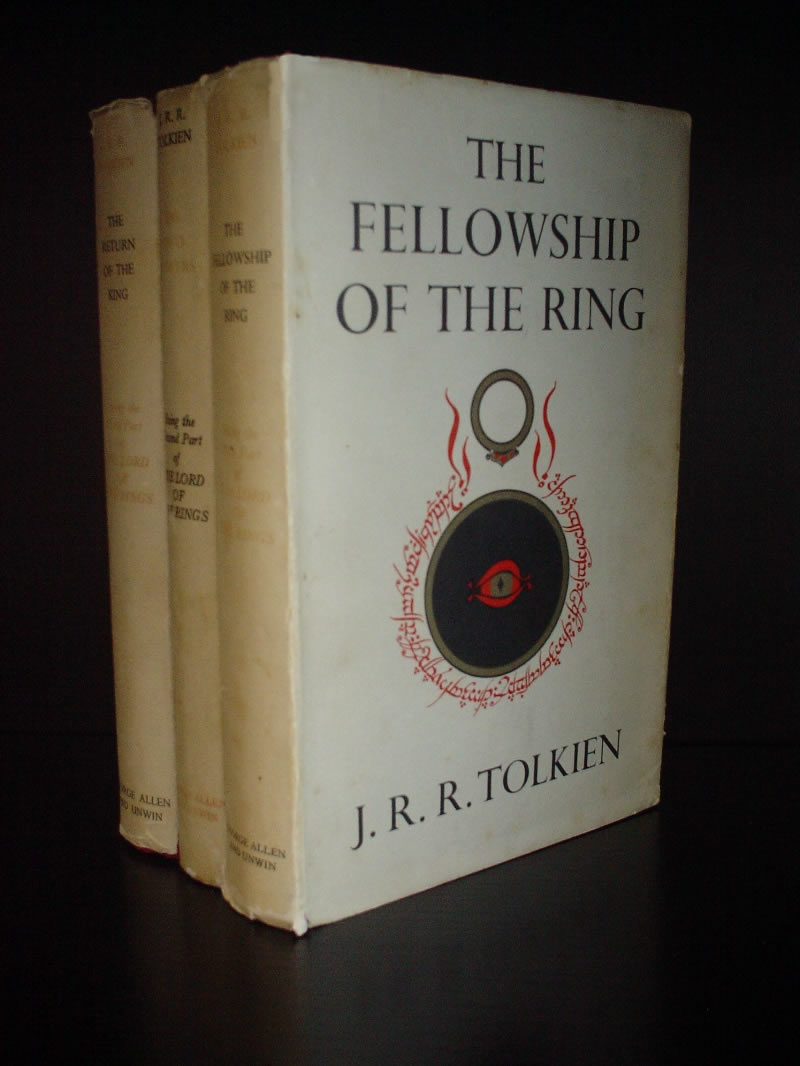
     Lord of the Rings, JRR Tolkein
     To Kill A Mockingbird, Harper Lee
     Tess Of The D’Urbervilles, Thomas Hardy
     Lanark, Alasdair Gray
     Midnight’s Children, Salman Rushdie
     His Dark Materials, Philip Pullman
     Jonathan Strange and Mr Norrell, Susanna Clarke
     Pride and Prejudice, Jane Austen
     Gormenghast, Mervyn Peake
     The Road, Cormac McCarthy

With over a million paperback sales in Britain alone, David Nicholls’ bittersweet romance One Day is one of the best-loved books of the moment. The film is out this week - which is why the book is appearing on the covers of magazines.
But what are the best-loved books of all?
The Big Issue is this week relaunching my off the cuff bid to compile a Top 100: the books you couldn’t live without.
I’ve been running the poll for the past few weeks right here. But now the magazine sold by the homeless is taking the idea to a national audience via its own websites www.bigissuescotland.com  and www.bigissue.com.
Together, we want you to list the ten books you think are the best you've ever read. The ones you believe are genuinely memorable and entertaining.
The responses I’ve received so far have been extraordinary: diverse, unusual and challenging.
But even with a small sample it was clear that a few titles were appearing again and again.
From these I have compiled a Top Ten – reproduced here. And it’s hardly a surprise that perennial favourites Lord of the Rings and To Kill A Mockingbird are neck and neck at the top.
But notice that there is no Dickens, JK Rowling or Agatha Christie – despite the fact they are the biggest selling authors of all time.
Instead, readers went for cultish books like Lanark, Gormenghast and the bleak American masterpiece The Road.
What makes the final list depends on you.
Email your top ten to top100books@bigissue.com.
There are no boundaries. All genres should be considered - just vote for the books that mean the most.www.bigissuescotland.com
Everyone who has voted so far will have their lists folded in to the new campaign. Over the next few days I'll break down the list of titles I have so far to give you some ideas, and to create talking points.
What has become obvious is that the more people who take part in this poll, the more meaningful the final list will be so please share this link with your friends on social media and encourage others to take part. We are all really looking forward to seeing what the final top 100 will look like.


Wednesday, 3 August 2011

The Worst Summer Read You Ever Read | Top 100 Books


The clock is ticking on our search for a new list of Top 100 Books. You have until the 15th August to send me your top ten. Don't think about it, just do it! That way, when you see the final list, you can't complain that you didn't have your say.

In the meantime I am on holiday. So I'll be blogging less, if at all, and reading slightly more. Hopefully.

It got me thinking about summer reads. The summer holiday is sometimes the best chance people get to sit down and read a book. Long lazy days soaking up the son with a copy of Lee Child in your hand, or a James Clavell, as it was when I was a lad.

Being an earnest sort, when I was eighteen I remember taking Moby Dick with me round Europe while travelling on an inter rail ticket. I told myself that wading through this American Victorian leviathan would do me some good while spending hour upon hour on trains. Well, the most I can say is that I definitely finished the book but it didn't enhance the travelling experience - and it didn't help me appreciate or be transported by Melville. I doubt I'd pass a multiple choice on the book now, albeit 25 years later (almost). Sometimes I think I'd like to try to re read the book, it is after all meant to be brilliant and I was very young at the time. Too  young, perhaps to appreciate it, and too distracted. But then the memory of a horse meat sandwich some fellow travellers kind of obliged us to eat under threat of who knows what while travelling through the Balkans comes back, and the association is just toooo strong.

But I doubt Moby Dick could have been the worst choice. I guess I could have set off with something a lot worse. But what? Let me know if you've had an even bigger summer read disaster.

* Update: @averydryfino tweets to tell me that Infinite Jest might be her holiday reading hell book. She's a third of the way in and struggling. Can anyone help her?

Friday, 22 July 2011

Top 100 Books | Harper Lee, the one book wonder


As we near the end of this search for the Top 100 books, one thing is pretty clear: To Kill A Mockingbird will definitely be on it.

In fact, as you can imagine, it is competing for the 'top spot' - book with the most mentions - with that other perennial, Lord of the Rings.

Harper Lee's first and only novel is remarkable for so many reasons. Remarkable that a writer capable of producing it never published again. Remarkable that the book has endured down the decades.

Last summer there was a British documentary in which a fan of the book went in search of the writer. Even though he was walking up and down her street in Alabama, Nelle (her full name is Nelle Harper Lee) was never tempted to call a halt to her long held ban on interviews. We didn't even catch a glimpse of her.

I respect that. What a sweet contrast to her life long pal, Truman Capote's very different approach to the media. Capote was a brilliant writer, but his books don't last the way Lee's solitary title does. There is something timeless and simple about her approach to writing.

But what do you think?

Wednesday, 20 July 2011

A New Book List | More lists please | The leading titles so far | Top 100 Books


I need you to send me more of your top ten books. I need you to call your friends, email your acquaintances and post the link on Facebook. This list is on the verge of working really well - but more people need to take part.

The trouble with lists...

The search for a new book list Top 100 was always meant to be a bit of fun. Not a definitive exercise. But it is an idea that has undboutedly caught on. The response to this website has been brisk, and it has been interesting to see other organisations launch their own Top 100s.

But what is clear to me at this late stage is that the more people who send a shortlist the better the final result will be. So get thinking, and please get in touch.

To encourage you, here below is the top ten so far. Surprised? Well, send me your titles and make sure the books that matter to you get a mention. This is open until the first week of August.

1. Lord of The Rings, JRR Tolkien
2. To Kill A Mockingbird, Harper Lee
3. Tess of the d'Urbervilles, Thomas Hardy
4. Lanark, Alastair Gray
5. Dark Materials, Phillip Pullman
6. Pride and Prejudice, Jane Austen
7. CrossStitch (US- Outlander), Diana Gabaldon
8. Ghosts, John Banville
9. Gormenghast Trilogy, Mervyn Peake
10. I, Robot – Asimov

Friday, 8 July 2011

Fiction Books | Glasgow Herald joins World Book Night in chasing a Top 100 List


Years ago when I worked on a national newspaper I remember getting a 'ring in' - a call from the member of the public - from a woman in Stoke, or perhaps it was Hull, or Swindon, who swore blind that Chris Evans, the then Radio 1 breakfast show host, was stealing her jokes.
Not just the odd joke you understand, but all her jokes, and doing so in a systematic fashion. He had, she assured me, parked a white van outside her house which was stuffed to the gunnells with high tech listening equipment.
Of course, I knew straight away that the poor lady was deluded, behind in her medication or just plain barking - and in the way of journalists I did the only decent thing. I gave her the number of a friend of mine on a different newspaper and suggested she tell him all about it.
"It's just not my kind of story," I said, "but he'll love this."
Flash forward to this week and I have a sense of what that paranoid woman must have been feeling. I've already noted that World Book Night is holding a poll to determine a top 100 favourite books for 2012. Well I've just noticed that the Herald in Scotland - the Glasgow Herald, as I knew it growing up - is doing the same for Scottish titles.
Well good luck to them. My own list will be out at the end of July - and featured in the Big Issue some time in August. In the meantime please send me your suggestions for your top ten, to be incorporated into the final 100. The replies have been slowly mounting up, but the more responses we get the better.
Post yours in the comment below.

Tuesday, 28 June 2011

The World Book Night Top 100 Books: now there is a familiar idea

Could Tolkien's trilogy sneak into the Top 100 (ha ha)


Seriously guys, I think you'll find this was my idea....
Ok, so a list is a list is a list. And this is an obvious way to do it. But isn't it a bit weird that while still compiling my own crowdsourced list with The Big Issue that WBN, World Book Night, should come crashing into cyberspace with their own Top 100 challenge?
Asking for personal top ten lists?
It seems that great minds sure do think alike.
Well are going to get ours out in August. The WBN version won't be ready until next year. So nah nah ne nah nah.
In the meantime you might want to check out their site. It is carrying an 'ever changing top 100'. This in itself acts as a great reminder of the books that are out there; books  that are in their own way all utterly unmissable.
A word of caution though. The Top 100, our one that is, is about being individual, distinctive.
So please, as you read down the WBN list as it stands now, don't let yourself get hemmed in by it. Think out of the box - and off the mainstream bookshelf. Don't just throw in the last Costa prize winner you happened to read. Remember all those books you've loved. Not the ones everyone said you had to read....

*


Speaking of which, I was chatting to a friend the other day and commiserating with him as regards Kate Mosse's multi-million selling Labyrinth.
At the time the book was published critics and other novelists hailed it as 'Dan Brown with brains'. I think that is what it was. Anyway, if you are ever tempted by it, do yourself a favour. My friend and I concurred: we've yet to meet anyone who has actually enjoyed it.
Mosse I am sure is a lovely person, a terrific advocate for good, populist novels, and I don't begrudge her the success of the book. But if ever there was an example of a novel that caught on like the proverbial wildfire without ever deserving the sales and attention it got, well then Labyrinth is that book. I remember the sensation of keeping on till the end, assuming it was all going to get incredibly clever and satisfying.
I was disappointed.
What I'm saying is this: don't believe the hype.
Read and judge books for yourself.
And send me those top tens!!! We'll be compiling the list for August, so there isn't a lot of time left.
Oh, and you may as well send them to World Book Night too. But do let them know where you read the idea first...


Friday, 10 June 2011

Book lists, FR Leavis, and why he wouldn't have liked Twilight much...


A book list is meant to be a fun thing: something to talk about in the pub, or at the book group when the wine has replaced the paperback and the evening really gets going. But it isn't necessarily trivial: indeed one list more than any other single thing has had a lasting impact on the books we read and how we read them.

It occurred to me that the originator of the idea, at least in the modern literary sense, was FR Leavis. Forget that mythical BBC list all this is based on, FR Leavis was the man. A Cambridge don, he is credited with defining what has become known as the English canon: the great works of literature next to which everything else is compared.

To Leavis "great novelists show an intense moral interest in life" (I'm quoting Wikipedia, sorry it was the one that came to hand).


The authors he believed came up to his high standards included Jane Austen, George Eliot, Henry James, Joseph Conrad and DH Lawrence. Famously, or infamously, they excluded Thomas Hardy and Charles Dickens: hugely popular writers but not, he felt, serious enough. Compiled for his book The Great Tradition in 1948, it didn't bother with the likes of Tolkein or CS Lewis either.

The thing is, Leavis' canon is simply a list. And it's his list, one which we are entitled to disagree with. He ended up disagreeing with himself, and 'rehabilitated' Dickens in 1970 with another book.

It's the legacy of his Great Tradition which is extraordinary. Leavis effectively started the whole literary fiction-commercial fiction dichotomy. The one that exists to this day giving us the Man Booker, snotty editions of the Culture Show and those depressing lists of the Best Young Writers Under 40.

I enjoy a great literary novel: if it is original, engaging and interesting. I can also enjoy a thriller, mystery or even (it has been known) a vampire romance.  FR Leavis would not, I think, have had much time for Twilight.

Friday, 3 June 2011

Top 100 Books: the last ten years


As you work on that list of the ten books you would most like to see included in an overall Top 100, you might like to take a glance at this December 2009 article in the Guardian which sought to define the top 50 books of the Noughties.
This isn't a collection of books the Guardian journalists think are the best. They are the books that they feel were the most significant. And it is a terrific reminder of a lot of novels and works of non-fiction that left a lasting mark. They range, therefore, from works by Christopher Hitchens and Zadie Smith to those of the glamour model, Jordan, who has admitted she never reads the books published with her name on.
Scanning the list I was struck by some of those included. Smith's White Teeth seemed revolutionary at the time, but now, I'm not so sure. Her follow ups have disappointed (come on, be honest).
The Road, by Cormac McCarthy, is in there, as it well should be. But I didn't spot any Roth, unless I'm mistaken.
Lists are always subjective. That's the point of trying to crowdsource our Top 100. The more lists we get sent in, the more meaningful and interesting the final list will be. And then once it is eventually compiled we can all get down to the important bit, which is arguing over what has been left out.
So get thinking, share the idea, and get those lists coming in!

Wednesday, 1 June 2011

Top 100 Books: what are the best selling books of all time? Tolkein? JK Rowling? Dickens? Or Agatha Christie?


Like football fans dreaming up their first eleven of all time, avid readers love compiling lists of books.

That's why we challenged readers to help us come up with a new list of the Top 100 books that are Must Reads.

We want you to tell us what books have meant the most to you. The ones you'd pass on to your kids. The ones you revisit over and over again or which stay with you for the rest of your life.

So far we've had some stonking suggestions. Many lists reflect just how eclectic modern readers are: a bit of sci fi, a few classics, some modern lit fic. Contrary to what you might expect, few people restrict themselves to one genre or time period. It is clear that avid readers are also adventurous and seek out new writers and titles all the time.

But what if the list was restricted to the best selling books of all time? What would that look like. Actually, that's pretty easy to see because a quick Google search will throw up lists based on sales. These are from Wikipedia and are, therefore, probably pretty accurate.

Top 5 best selling single volume novels of all time:
A Tale of Two Cities, Charles Dickens, 1859, over 200 million
The Lord of the Rings, by JRR Tolkein, 1954-5, over 150 million
The Hobbit, by JRR Tolkein, 1937, over 100 million
Dream of the Red Chamber by Cao Xueqin, 1759-1791, over 100 million
And Then They were None, By Agatha Christie, 1939, over 100 million

No surprise to see Christie up there. Next to The Bible and Shakespeare, her books have outsold everything else by any other author, over four billion and counting - she wrote over 80 detective novels alone. Rather tragically for her and her family she signed away most if not all the rights to her work in return for a fat cheque in order to pay a large tax bill.


The others are not much of a shock either. Tolkein's bandwagon is huge and will get bigger with The Hobbit films when they are released in 2012 and 2013. Perhaps it is a surprise to see Dickens at the very top, but he was the original literary superstar and his writing was always accessible and readable enough for even a 150 years not to dent its appeal.

As to Dream of the Red Chamber... I must admit that's one I need to put on my Amazon wish list. It is one of China's four classic novels, written in the vernacular. It sounds intriguing and 100 million Cantonese speakers can't all be wrong.

Further down you find Dan Brown's The Da Vinci Code (80 million) and Catcher in the Rye (65 million). JK Rowling's Deathly Hallows is the top selling Harry Potter with over 44 million sales. Incredible really, for a book that's only been out four years. CS Lewis' The Lion, the Witch and the Wardrobe has sold 85 million since it was published in 1950.

Of course, our Top 100 Books list isn't about sales. It's about your judgement as to the value of a book: be that literary, entertainment, originality, the strength of the idea. Also it is meant to be personal and idiosyncratic. The resulting list will and should be a surprise to everyone. If it isn't we'll all have failed.

So what is your list? Leave it in the comment below and I'll integrate it with our master list. Over the next few weeks we'll be running the challenge in The Big Issue and hope to come up with a definitive Top 100. But all you need to do is think of five titles and authors, or ten if you can.

And please share the challenge with friends too. The more lists, the better the final result.