Monday, 10 June 2013

Goodbye Iain Banks | Scottish author of The Wasp Factory, Culture, The Crow Road

The end when it came was far more sudden, far swifter than anyone had thought. Ian Rankin, his friend and fellow Fifer, in a touching, off the cuff,passionate tribute, told the BBC news last night that even as recently as last Tuesday doctors had told the author that he had months rather than weeks to live. It turned out to be days.

Banks was 59. A prolific novelist, he has written science fiction and ‘mainstream’ novels since his early twenties – his breakthrough, The Wasp Factory, was published when he was just 29. He was a storyteller first and foremost, which is perhaps why he was never feted by the literary judges. His fans loved him, forgave him, delighted in his success when he got things right. The comments on social media over the past 24 hours have been telling: Banks wrote about a world people recognised as their own time and place.

North of the border this meant a lot. Banks’ novels with their Scottish settings, accents and colour offered his fellow countrymen a strong sense of identity in a culture that was otherwise dominated by American TV and film; not to mention a London-centric culture.

His Scottishness might have been off-putting to those who didn’t come from the land of his beloved whisky – but the opposite was the case. If anything it made him more endearing.

Neil Gaiman: He was one of us
One of the most moving pieces about him I’ve read this morning is Neil Gaiman’s in the Guardian. There’s a degree of respect there, of love, even though the pair were, as Gaiman puts it, not strictly speaking that close.

Gaiman is English-born, American-based, but Banks was “one of us”, noting: “If you've never read any of his books, read one of his books. Then read another. Even the bad ones were good, and the good ones were astonishing.”

I interviewed Banks a year ago, on the phone, about his thenlatest novel Stonemouth, for the Big Issue’s books pages. It’s a brief article and one that didn’t really do him justice. But at the time it wasn’t Iain Banks The Author we were talking about it, was simply The Latest Iain Banks Book, and I’d never have held it up as one of his best.

That said, there was something about Stonemouth, as Gaiman says, that makes it worth the read. And you felt reading it that this was the same man who had written The Crow Road, The Bridge and The Wasp Factory. There was a heart to it along with the darkness. It suggested there was more to come…


Just two books have followed. The first was his last Culture novel, The Hydrogen Sonata, and now this month we get The Quarry, which focuses on a boy whose father is dying of cancer. Yeah. Worth reading. Expect a lot more heart.


Tuesday, 22 January 2013

A26 | Roadkill | Pascal Garnier


Pascal Garnier’s The A26... this is literary fiction with a hapless, desperate serial killer.

At first I didn’t think it really came off. We’re introduced to Yolande and Bernard, a peculiar brother and sister who live together in a small town outside Paris. Yolande hasn’t left the house in years – not since the end of the second world war. Her brother has just discovered he is dying, which spurs him, oddly, into a killing spree.

At first Garnier seems intent on playing this for laughs as if the victims are utterly meaningless and that jars a bit.

But as the book went on it began to really grip me. The truth that is revealed is that for these Frenchmen and women the war has never really ended, and they are the poorer for it.

Pow! First impressions of a controversial Chinese literary POWerhouse


Thinking about it, 2013 has to be the ideal time to focus on the big wide world. The last twelve months have, after all, been so bloody British: Jubilee, Olympics, about a dozen pageants, Dickens, Shakespeare, even Scottish independence. There were entire weeks when you wondered if the rest of the globe had shut down completely.

So it’s a relief to pick up a book and travel without leaving your armchair – and a good novel is better than the average airport departure lounge or hotel swimming pool. A trip to China? I was sceptical of reading my first Mo Yan, what with his comments about Chinese state censorship which led to Salman Rushdie calling him a “patsy”. Ouch. But Pow! is a pleasant surprise. A strange, dirty, picaresque novel that struck me as entirely political and hugely critical of Chinese society.

I’m no Mo Yan expert (who is?). But it’s worth recalling that much of what we now consider our own great art was written under British state censorship – Shakespeare included – both moral and political. This isn’t to excuse China’s one party state, but surely each individual artist must address the realities of his time, and work within them, if he is to be heard at all.


And Pow! doesn’t read like an apology for anyone. Told in a complex fashion in two parallel narratives by Luo Xiatong, aged ten and twenty, it describes a corrupt, rural village which to some extent could be anywhere, east or west, in the past three centuries. It’s shocking that this is actually a description of China as recently as the 1990s: a time when its peasant communist society was being swept aside by the crudest most amoral brand of capitalism. The village makes its money from selling meat, any meat – beef, pork, camel, dog, you name it – which the butchers pump with water and formaldehyde to boost profit.

I found it didn’t matter that the book’s construction was a bit strange and rambling. I was travelling an alien landscape and I’d take whatever was coming. What I got was part social commentary, part satire... and a lot of stuff about meat and sex. Yes, the world’s new superpower is eating a lot of pork. But is Mo Yan worth his Nobel? Is anyone?


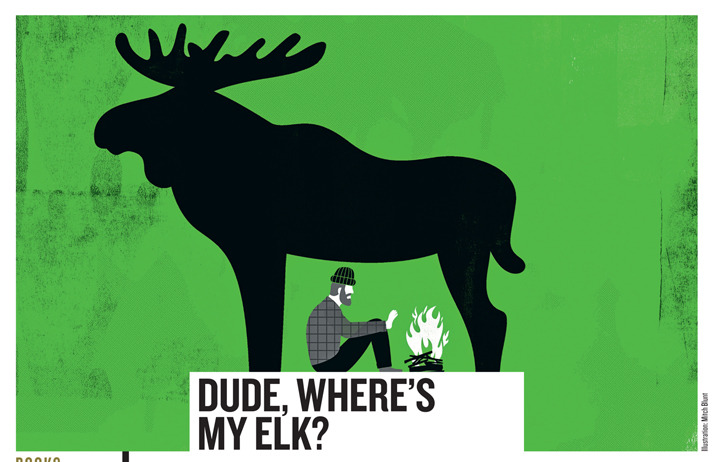
An Elk is for life, not just for Christmas... Doppler


The cover of Doppler by Erlend Loe comes with a neat little tagline: “An elk is for life... not just for Christmas.”

John Lewis, eat your heart out. But clearly we are in Norway, where elk roam free. I don’t know if you’ve ever been to Scandinavia and seen one but a few years ago I drove past several while in Sweden and marvelled at their big dopy faces, loping walk, and vast antlers. If the elk was a Coen Brothers movie it would be The Big Lebowski.


Doppler is middle aged, his father has just died, and he’s fallen off his bike. So he leaves his comfortable Oslo home, takes a tent and heads off to live in the woods, “adopts” an elk calf and calls him Bongo.
He stays put for over a year, carves a totem pole and becomes the focal point of an ad hoc all-male, tree-hugging cult. “The forest is gentle and friendly,” he says at one point, like a Nordic Obi Wan. “It’s the sea which is fickle. And the mountains. But the forest is predictable and less confusing than almost every other place.”

The whole thing is funny and a touch dark. Norwegians seem to have an endearing offbeat humour these days – the tone isn’t unlike Lillyhammer, the Steven Van Zandt comedy BBC4 ran recently – perhaps due to being fabulously rich thanks to all their oil. (Notably, this book’s satire dates from 2004, before the credit crunch, austerity and the squeezed middle.)

It’s charming. And it made me think: Doppler’s decision to live in a forest really isn’t so crazy. In fact, it is kind of extraordinary that more men don’t follow his lead. That the woods aren’t stuffed full of middle-aged IT workers, accountants and company directors who, like him, have grown fed up of the routine drudge, their wives’ moods, and the sound of the Teletubbies on TV. Men who only really want their own company. And to urinate in the open air.

Another short novel that caught my eye for entirely different reasons was The Black Lake by Hella S. Haase. A Dutch writer I’ve been meaning to introduce myself to for a while, she writes about her country’s colonial history. She died in 2011 and this novel actually dates back to 1948, but the translation is as fresh and as current as any Booker nominee.

Haase’s young narrator grows up in Java in the 1920s and 30s, his distant plantation owning parents a mystery, his only friend Oeroeg, the native son of the estate’s foreman. As the boys get older they become aware of the racial and cultural divisions which eventually will tear their world apart. It’s barely a hundred pages but beautifully judged, and a genuinely intriguing insight into the end of a European empire.

All of which has nothing whatsoever to do with tennis, the subject of the first essay in Both Flesh And Not by David Foster Wallace. You’ve heard of him: friend of Jonathan Franzen; highly regarded in America’s literary circles; dead at 46, having committed suicide following a long battle with depression.

These essays span two decades, and range from some thoughts about Terminator 2 to a list of under rated American novels. (Including Blood Meridian by Cormac McCarthy, of which all he says is “Don’t even ask”.)

The most enjoyable is about watching Roger Federer play tennis and dates from 2006, when the Swiss was at the height of his domination. It manages to be detailed, strangely moving, and highly readable.
But no elks.

Doppler by Erlend Loe (Head of Zeus, £7.99)

Friday, 23 November 2012

SAS man hits the high street | Theo Knell struggles to adjust


If there is ever an invasion.... I want TheoKnell on my side.

Theo served with the British Army, including the SAS, for 22 years. A Hell for Heroes is his attempt to give an honest account of army life and very importantly, life after the army.

It’s a fascinating read, warts and all – covering service in Ireland and Africa - which will leave you with deep respect for the military. Even Paras puke with fear, but they jump just the same.

People like Theo are fitter, tougher and more capable than 99% of civilians could ever be. They can load weapons under fire, run 40 miles, cure a village of dysentery and perform surgery, as and when required.  

But when they are thrown out into Civvy Street, all the structure, camaraderie and usefulness is gone, leaving a terrible vacuum.

For Theo, that was when the nightmare of post-traumatic stress disorder began. He found it hard to land even the most menial of jobs: a leader of men it took him years to find his feet. He urges the services to do more to make the transition from military life to civilian life better. They should.


CJ Sansom | Dominion | Nazis in Great Britain


He is best known for his historical detective series starring the Tudor hunchback, Shardlake – think Wolf Hall crossed with Inspector Morse. But with Dominion, CJ Sansom takes history by the neck and sends it flying. “What if,” he’s asking, “Germany hadn’t lost the war?”

We’ve been here before. The author has already highlighted two influences in Len Deighton’s SS-GB and Robert Harris’ Fatherland. But Sansom has a different approach and the result is a highly entertaining, thought-provoking page-turner.

His scenario is that when Chamberlain resigns as PM in 1940, Churchill is sidelined. Winston wasn’t really the favourite at the time, so perhaps it isn’t that big a stretch to imagine Lord Halifax, the senior Tory, squeezing him out. Sansom argues in a lengthy historical note at the back of the book, that had this happened Britain would have likely sued for peace and learned to live with the Nazis.

The consequences of this become clear as we flash forward to a fictional 1952, where Sansom weaves a story of resistance fighters, spies and Gestapo detectives. It hangs together, just about, and certainly kept me gripped. There’s a large cast, but it is handled well, with plenty of time taken to make you care about each character, just enough. Sansom manages another trick too: he is able to remind you why Nazis are so scary 
– capturing both their deranged logic, and their cruelty – while avoiding the worst stereotypes.

He’s clearly done his research: barely a page goes by without some sort of clever twist on reality. The newspaper magnate Lord Beaverbrook has become a Nazi-sympathising PM, Enoch Powell is in the Indian Office, the fascist leader Oswald Mosley – who in reality spent the war in prison – in the Home Office.

As a Scot, Sansom saves some of his most vitriolic contempt for the Scottish Nationalists – having one character note how they voted against conscription at the start of WW2 – which they did, in 1939. And in his lengthy historical note he brands the SNP “dangerous... shrewd political manipulators”, an outburst that has already earned him column inches north of the border.

Actually, I thought at times the author dwelt a little too much on his re-writing of history, allowing his characters to discuss events a bit too often. But the plotting is both complex and well paced. Yes, there’s a sort of ITV drama feel – perhaps because the prose comes without F or C-words, explicit sex scenes and the violence is never overwhelming. In fact, everything is somehow quite proper, like a 1950s black and white movie. But that will only help it, deservedly, find a big audience.


Monday, 12 November 2012

Tulisa Honest My Story So Far | Celebrity Biographies, two for a pound | Oh no, it's Christmas


You can tell it’s getting close to Christmas from the glossy tell-alls piling up in the shops. Out of the current top ten hardback non-fiction chart no fewer than six titles are celebrity memoirs.

Getting well groomed, expensively dressed actor and singer types to turn up at the annual staff barbecue is a nice bonus for publishers, but the real reason these books exist is that folks like Cheryl Cole have the kinds of fanbases mere fiction authors can only dream of.

Consider: 12 million people watch The X-Factor. So if just ten percent stumble into a shop and accidentally buy Tulisa’s new book... kerching!

Be warned though. Sleb books (as I shall now irritate you by calling them) come in two broad categories. There is highly rare but prized “great story involving a Sleb”. Remember Richard Hammond from Top Gear writing about the crash that nearly killed him? Corking stuff. Sold a shed-load. But the follow up in which he mused about stunt biker Eval Kneival....er... didn’t.

Which brings us to the common or garden “Sleb in search of a story, any story”.

Take Miranda Hart for instance. If you love her BBC1 comedy series, ahem, Miranda, and many apparently do, then I guess you might well get a kick from Is It Just Me? in which said famously tall person discusses life themes with her 18 year old self. (Yup. She really does.)

Literary types might suspect the well-educated Ms Hart (she went to boarding school and played Lacrosse) is channelling not just the classic dialogues of Plato and Aristotle, but also Tristram Shandy, the celebrated 18th century meta-novel which spends most of its time worrying about how to begin. She even addresses us as My Dear Reader Chum or MDRC for short. But ol’ Shandy just wasn’t as “hilaire”, a term that crops up a lot, as ol’ Miranda.

A lot of Hart’s comedy is based on embarrassment, but the embarrassment that oozed from these pages was that of an otherwise talented performer and writer who had a highly lucrative contract to deliver a book when she had very little to put in it.

Perhaps Miranda is too young, at 37, to have a proper biography or a memoir in her. But then there’s Tulisa, who has just published Honest at the grand old age of 24. And it’s packed with... stuff. No Lacrosse jolly sticks here: Tulisa grew up in gritty North West London, lost her virginity at 14, and was a pop star about five minutes later. She likes to “get up to mischief”, a phrase she actually uses, and the detail, as you would expect, is fairly intense: “Chapter Five: After my success in Bugsy Malone at primary school, I was determined that I would become a recording artist.” Gasp.

High points include going to a strip club with her non-boyfriend record producer (“Of course, the press were all over it”) and how she never slept with Mark Wright from The Only Way is Essex (“Why is it that I can’t be friendly, or even a bit of a flirt with a guy without everyone presuming I banged him?”)

Saturday night TV fans will note that Tulisa is up against Strictly Come Dancing’s Bruno Tonioli, not only as judges on rival shows but on the bookstand, which brings me to one of the few genuinely good reasons to buy Sleb books: embarrassing pictures of the subject’s youth.

Bruno’s pics are particularly hilaire: as a toddler he was clearly rescued from the Italian version of The Addams Family and as a teenager from the Italian version of The Breakfast Club. You’ve never seen so much hair and teeth. Or man nipple. But the actual content? How can I break it to you darling? You write like a moose... doing a tango... wearing a swimsuit... on its head. Pass the sickbag.

Monday, 5 November 2012

JK Rowling | Lennoxlove book fest

So I'd actually booked tickets to go to Lennoxlove for the JK Rowling event. The main tent, where JK was appearing, was sold out, but they had a cheaper ticket for another marquee where the interview would be streamed live. So I bought a pair for Carmen and I.

Yes, we're Harry Potter fans, and as writers we were both extremely interested in what Rowling was up to writing a grown up book about ....


Well at the time we didn't know what it was about. This was back in September, or August, and The Casual Vacancy was still a mystery. Actually, most of us hoped it would be a mystery. What we got instead was a highly serious, literary novel with a million different characters which was funny in parts, impressive in parts, emotional in parts, but hard to like.


Anyways, we were resigned to being in the satellite tent when Carmen's sister got in touch. Would we like VIP tickets?

Turns out a business contact of hers had sponsored the book festival and had a handful of spare tickets. Two to be precise. Carmen's sister was booked to do something else that night, but the contact was happy with the idea of us going.


I really enjoyed myself. Rowling is a highly polished speaker and in person, at a literary event -- and, admittedly, with an interviewer who couldn't have fawned more (Muriel Gray, take a bow, you are in Hufflepuff) -- she comes across as far more relaxed and humane than she ever does on TV.


She has a wicked, almost boozy laugh, too, which was put to good use on discussion of the stronger launguage in the book. Telling one woman that she should "reclaim that word" -- the c-word -- because it is, after all, a reference to part of a woman's body. Also she spoke very passionately about the politics of the book. And she kept the Daily Mail jibes to a minimum, which was probably a good idea. Because by the look of the audience almost all of them were Daily Mail readers.

Actually, the audience was very sweet. Refined certainly -- a cut above that crowd who go to Edinburgh book fest -- and we did have a Duke at the next table during dinner. The Duke, it was his house, you see. But I found the people I spoke to very entertaining.

Lennoxlove is a terrific venue, actually. Small and intimate, but stunning visually. I'd definitely try to go again.


Robyn Young on Robert the Bruce and Scottish independence from England


I really enjoyed my recent interview with Robyn Young.

There's a lot to admire about an author who stuck with it, for so long, in order to get her first book published. Seven years, and as she put it, countless re-writes.

Eventually she found an agent and eventually she and that agent were able to get a small huddle of publishers interested. Her recent book, Renegade, part two in her second trilogy -- this one is about Robert the Bruce -- was a top ten hardback bestseller. Her books also sell round the world. So it makes you wonder what the problem was -- why did it take so long to get one publisher to back her with her first book, Brethren?


Well, sometimes it just does that's all. I know from personal experience how many times you can redraft a book, how you can take a manuscript that you thought was done and improve it in ways you never thought possible. Interestingly, Robyn changed the narrative point of view -- I think twice -- taking an MS that was at one point told in the first person into the third person.

These technical things make a huge difference to the reader's experience and to the kind of market you can reach. Young's books are "mainstream historical fiction". they appeal to Bernard Cornwell fans. I actually prefer her writing to Cornwell's.

Here's the interview that appeared recently in Big Issue:


The best historical fiction doesn’t just recreate the past, it speaks to the present. Robyn Young has the knack of finding subjects that resonate. Her debut trilogy – Brethren, Crusade and Requiem –told the story of a young Templar knight while offering a startlingly fresh view of Christian-Islam relations in the 13th and 14th centuries – just as 9/11 threatened our own 21st century safety.

Young is currently deep into her second trilogy – and this time her concerns are closer to home. The action is centred not on Accra and the Middle East but on Scotland and its wars for independence, just as talk builds of a referendum north of the border.

Insurrection and the just released Renegade follow the controversial career of Robert the Bruce: King, warrior, turncoat and/or murderer, depending on your point of view.

“I was in Scotland doing research for Requiem, in which I thought Bruce and William Wallace would have their part to play,” Young explains. “But the moment I started looking in-depth into Robert’s story, I realised a sub-plot in a story about the Templars and their downfall would not do it justice.”

Young has since retraced Bruce’s steps from the remotest parts of the Highlands and Islands, to battle sites like Caerlaverock Castle near Dumfries in the south.

“Wallace’s story is simpler, more black and white,” she notes. “But Bruce’s is so complex, convoluted and shifting in terms of his allegiances -- I couldn’t have conveyed all of that in the earlier book.”

So compared to the hero Wallace, lionised by Mel Gibson, does Bruce gets a bad press? “He gets really short-changed in the film Braveheart,” Young says. “It narrows his story down to a very simplistic role. But he was far more complex than a Hollywood film can portray. I don’t know how you’d even begin to fit Robert into a movie.”

Part of the Bruce appeal was undoubtedly the novelty. Born and educated in England Young admits she was completely unaware of his part in British history – it wasn’t on the syllabus at school when she sat her History GCSE, and she isn’t a formally “trained” historian. As she conducted her research, she quickly found herself transfixed.

“I got the sense not just of how important it was for Scotland but for Britain as a whole,” she says. “And I wanted to convey the many crossovers and similarities there were between the kingdoms – as well as the differences. There were marriages and relationships that crossed the border. On the ground, the armies weren’t Scots v English, it was more mixed up.”

So are their parallels with the current debate about Scottish nationalism? “Doing the research makes me understand why there is such a strength of feeling behind Scottish nationalism. But my own family goes back to Scotland, Ireland and Wales more than England. I’m English but I think of myself as British and I would like to see us stay together.”

The thrust of Renegade is the English King Edward I’s attempts to gather together the Scottish Stone of Scone, the English Sword Curtana, the Crown of Arthur from Wales, and from Ireland, the Staff of Malachy. This is a delightful McGuffin, which not only drives the action but is placed on sound historical evidence.

“At a point in 1307 just before Edward I’s death, there is an odd little reference in history that the Prophecies of Merlin were being re-told throughout the land so that when the covetous old king dies, Britain will live together in harmony,” Young explains.

“We know Edward definitely owned a copy of Prophecies of Merlin, and then you look at what he did – in taking the crown of Arthur from Wales and the Stone of Scone from Scotland. I read about this early on in my research and just went with it. But whether he believed in it himself or whether it was all clever propaganda I don’t know.”

The Stone of Scone of course was returned to Edinburgh in 1996, a year before a referendum gave the Scots their own parliament. But who believes in Merlin nowadays?

Patrick Leigh Fermor | A Time Of Gifts | Mr Foote's Other Leg


These days, “adventurous” is buying an airline ticket and Skyping home to mum from a Thai beach bar. For Patrick Leigh Fermor, “adventurous” was flunking school and heading off, aged 18, to walk across Europe on a pound a week. No iPhone for him, it was 1934, and the journey took him a year.

He ended up in Greece, but when WW2 began dashed back to join the Irish Guards, because he thought if he was going to die he might as well have an attractive uniform. When he missed out on a commission he grudgingly accepted a transfer to the Intelligence Corps.

But Fermor was an extraordinary individual: outgoing, widely read, good with languages. His walk across Europe, “from the Hook of Holland to Constantinople”, immortalised in the much lauded travelogue A Time Of Gifts (1977), had broadened his horizons and formed his life view and he turned out to be a brilliant wartime agent.


The SOE sent him to Nazi occupied Crete where, for almost two years, he led a group of resistance fighters. Apparently he was one of several classical scholars working there – a knowledge of ancient Greek seen as a shortcut to the modern language.

Later, he was awarded the DSO for a daring mission in which he kidnapped a Nazi general and smuggled him off the island. He even left a note in the man’s car making it clear that it had been a British operation, signing it PM Leigh Fermor, Maj, O.C. Commando. In peacetime, his activities on the island earned him a “blood vendetta” from those who blamed him for terrible Nazi reprisals. And yet he carried on living on Crete for most of his life.


When he died last year at the grand old age of 96, Fermor was fittingly described as a cross between “Indiana Jones, James Bond and Grahame Greene.” Artemis Cooper’s excellent, un-put-downable biography of lives up to this mix and offers a third person viewpoint Fermor’s own books, by definition, lack. She is lucky in her subject, not just because his life is littered with famous connections – the Sitwells, Lauren Van Der Post, Michael Powell and Emeric Pressburger – but because even from birth Fermor’s circumstances were extraordinary, and his attitude to life formidable. He loved to party, drank like a fish and squeezed the maximum from life.

While Fermor was famous for crossing Europe on foot, Samuel Foote was famous for having just one foot – he lost one in a riding accident. I’ve been relishing Ian Kelly’s Mr Foote’s Other Leg, about this once-celebrated 18th century actor, comedian, true crime author and friend to Princes.

Like Oscar Wilde in a later era, Foote was said to be the wittiest, most famous man in London, at a time when a clever remark in a coffee house was the equivalent of appearing on Radio 4 or getting a million followers on Twitter.

He made his name with a scandalous pamphlet describing how one of his uncles killed another in an argument over a will – a long running family dispute Dickens is said to have used as the basis of the interminable legal case Jarndyce and Jarndyce in Bleak House. Then he traded on his fame by taking to the stage.

But rather like Wilde, Foote was brought low by the scandalous suggestion that he was homosexual. For a 21st century reader, the transcripts from the court case are shocking and yet also, strangely hilarious. Foote might have recovered from the scandal, but according to Kelly his bitterness and wit got the better for him. He was ruined, forgotten and died, his one remaining foot in his mouth.


This review appeared in The Big Issue

Wednesday, 24 October 2012

JK Rowling | Marian Keyes | Middle Class angst


This book review is middle class because it feels awkward and insecure. (There’s something I can’t say, but I may put it on the agenda for the parish council.)

Marian Keyes makes a fine point near the beginning of hugely entertaining and often very moving The Mystery of Mercy Close. The Walshes, she explains, didn’t trust “the outside”, “especially because the lead on the telly didn’t stretch that far”. And yet her new boyfriend Artie’s family can happily sit outside of an evening, doing a jigsaw while drinking homemade valerian tea.

Whatever valerian tea is.

Keyes’ book is beautifully judged and extremely funny. A regular number one bestseller, her popularity doesn’t rest on an ability to make you laugh but on the fact her jokes pack a huge heavyweight emotional punch. It comes here as she explores her lead character’s suicidal tendencies. Keyes has herself suffered from depression and you sense her honesty.

Set in contemporary Dublin, this is a timely reminder of the hellish reality of the collapse of the Celtic Tiger economy. Helen Walsh is a private investigator, yes really, who was laughing back in the day when everyone carried a thousand euro handbag and got their husband followed. But Helen’s flat has been repossessed and she’s now living with mum and dad.

Yet her mother insists the Walshes are middle class. It seems the quest for social identity exists everywhere, not least in my loo where I have installed a very funny little hardback: The Art of Being Middle Class.
The average “MC” person lives in a “constant state of insecurity” unsure of their “tastes, pre-occupations, behaviours and sensibilities”, its authors inform me while offering expert guidance on “How to behave in a gastro pub”, “The proper position of a waistband”  and “Real gravy – the dinner party weapon”.

Dinner parties are a staple of JK Rowling’s first book for grown-ups, The Casual Vacancy. Or Mugglemarch, as Britain’s fastest selling book has been unkindly, but perhaps not unjustly described.

Samantha Mollison the owner of an outsized lingerie shop in nearby Yarvil, is a terrible cook and her casserole goes uneaten by her guests, so she gulps down a bottle of wine and says horrible things to wind up Kay, the social worker who has moved to Pagford from London in order to pursue her relationship with Gavin, a solicitor, who was born with two cold feet. Kay was quite flattered by the way Gavin didn’t bother to set the table while preparing a quick spaghetti Bolognese. And so on.

While Keyes’ novel belongs to the moment, for all its social realism and much talked about satire Rowling’s exists in a strange sort of a bubble. With its snobby bourgeoisie and its desperate underclass, Pagford is a made up everytown – JK herself has likened it to Anthony Trollope’s Barsetshire. And yet, no one there ever seems to watch much telly or care about the football score.

While the Potter novels are told clearly and consistently from Harry’s point of view, the Pagford pantomime is played out with a cast of what feels like dozens. Many literary novels do this. Few are any good. And The Casual Vacancy is a slow trudge for the first half. (She is clearly besotted with her characters and regularly uses parenthesis, like this one, to cram in extra detail).

And inner monologue, like this.

It does eventually pick up speed and yes of course, she draws you in before providing an emotional, and quite shocking pay off. But it is bleak. This is the world of the Durlseys, with Harry/Barry dead in the first few pages. And the reason why I’m feeling so awkward and middle class about it? I didn’t like it that much.

Monday, 1 October 2012

The Return of Captain John Emmett | Elizabeth Speller


This book was recommended to me. I'd completely missed it when it came out, even though it made the Richard and Judy list in 2011.

Richard, in the podcast for it, pithily describes it as a 'rattling good yarn'. It is. Speller's book is hugely enjoyable. Extremely evocative of the era -- the early 1920s, as Europe still struggles to recover from WW1 -- it manages a neat balance. Essentially this is a thriller, and quite a fanciful one at that. And yet it doesn't appear to be this at all, more  a lament, and a love story, for a generation lost.

There are echoes of Le Carre. Laurence Bartram is asked, by the man's attractive younger sister, to investigate the last months of the life of an old school friend, John Emmett, who has apparently killed himself. Gradually he pieces together Emmett's state of mind and in so doing Speller reveals some of the Great War's true horrors.

Speller is described as a poet and her prose is certainly of the highest calibre. As if every sentence has been pored over. And of course she is clearly highly knowledgeable about the First World War poets, those tragic young men who composed beautiful stanzas in the trenches. Those men certainly inform this novel.

I described it as fanciful: the plot grows and grows and takes twists that's more boy's own than you might expect. It's a hugely enjoyable journey. I scratched my head a fair bit over the character of Charlie -- who really did seem to be there to perform the function of a between the wars Google. If Laurie ever wanted to find out about someone in the military, he'd mention the name to Charlie and pop, up would come an address. Perhaps it worked that way. The old boys network. But it is certainly convenient for the plot.

That said, I found it extremely satisfying and I was intrigued by the portrait of the women. Contrasting portraits -- the radical former nurse and the stoic sister. A period when attitudes were changing, clearly.

The Return of Captain John Emmett on Amazon. But available elsewhere. There's a follow up too: The Strange Fate of Kitty Easton.


Monday, 24 September 2012

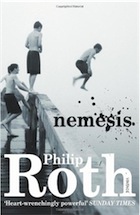
Nemesis | Philip Roth, wine and free books


Nemesis proved to be one of those books we were all able to agree on. Well, almost. Before George jumps in and accuses me of re writing history again not everyone was UTTERLY BOWLED OVER BY HOW WONDERFUL IT IS. George has doubts about the mid section. Doubting George. Always picking holes. Just because NOT EVERYONE IS BARBARA KINGSOLVER.

The evening was noteworthy in a number of ways. The location was shifted to MY HOUSE, where the red wine flowed like a fast flowing river flowing in a fast flowing way. I drank a bucket load and spent the next day groaning. I stopped groaning about four o'clock in the afternoon. By this time I couldn't remember the evening before. Not clearly enough to write a summary that is.

So, I had to go back to the CCTV footage. Carmen and I installed the CCTV system years and years ago when we were refurbishing the house. It has proven extremely useful as a means of tracing bunches of keys, shoes, children and various rubber instruments.

Arabella "I brought a bag"

This image reminded me that the purpose of the Fergus Drive location was to get rid of some books. But hey, Arabella, if you also need a mini fridge, go for it.


Mark goes in search of the loo

We waded through a lot of books. Most "were rubbish" and are therefore "still on my floor". The Winnie the Pooh erotica has disappeared. I think Martin had it in his pocket as he climbed, or was that more of a stagger, into his taxi at 3am.

Personally I think you missed some real gems. Embossed covers and everything. You will regret leaving those Reginald Hills behind, you know you will.


I hadn't finished Nemesis by the time of the meeting, so wasn't able to get stuck in to WHAT IT ALL MEANT and the IMPORTANCE OF GUILT as a theme, but I've added some thoughts in a blog below, should you want to wade through them. I did finish the book and LOVED IT. Roth is a genius. He is who I want to be when I grow old.

I should add, the quality of discussion amongst the group was particularly high. From Mark's extensive quoting of Latin to Martin's re-enactment of the first act of Hamlet, in which he played the Danish Queen Gertrude, were only two of the highlights. When Cathy offered to dissect our family dog I thought at first she was kidding.

Sadly neither John or Lisa were able to make Wednesday's lushfest. John was prowling the night cityscape taking photographs of the underside of motorways, while Lisa had a prebooking to play the ukelele. There are times when I wish I could make stuff like this up, but it is in fact true.


I should report that the Group had two special guests. Carmen Reid, celebrity author, occasional mother and the TALLEST PERSON PRESENT, sat in on most of the evening, helping with the wine lake.

And Jimmy, the Jack Russell, also made his presence felt before the heat of the fire, or possibly the intellectual rigour of the conversation, finally drove him to the back sitting room. Where he lay in front of the TV clearly wishing we'd turn it on so he could watch Top Gear, as he usually does on a Wednesday night.


Friday, 21 September 2012

Philip Roth | Nemesis | Polio epidemic, guilt and nostalgia


Roth is known for writing magically precise books. Prose that is as polished as the brass railings on an old style fire truck. Nemesis is a gem.

Short, about 230 pages, you'll breeze through this in a couple of sittings. Not just because of the word length but because the narrative is so seamless.

This is one of the most assured storytellers writing today. Roth begins with a factual account of how the Polio epidemic first hit the Newark area in the summer of 1944, before zooming in on the main subject of his novel, Bucky Cantor. Athletic, pure of heart, hard working. Cantor is a physical education teacher and a playground instructor. He loves teaching sports to young boys, seeing them evolve into men. An accomplished diver with a powerful physique, Bucky is however devastated when his poor eyesight prevents him from joining the Marines to serve in WW2. His two best friends head to Europe for the D Day landings. Bucky teaches baseball. Then the illness takes grip.

Roth is writing about his childhood here, about an epidemic many will have forgotten. Polio was defeated in the 1950s, but too late for the thousands who succumbed to it in the early part of the 20th century. It spreads around Newark like a plague. People are in a panic.

Bucky stands tall. He lends support. He encourages the kids to keep playing. Not to worry. But his girlfriend is desperately afraid for him and engineers a job offer -- a chance to get out of Newark, and away from the plague. He is determined to turn it down, but his desire to see her, to have a happy life, takes over. He takes the job. He heads to the mountains.

We discussed Nemesis in our book group and the section at the camp was the only one that drew any criticism. It seemed "too perfect". I can't really agree. This is a nostalgic passage. I sense that Roth is trying to capture something of his childhood here, and in doing so speaks volumes for America of the 1940s, for its ambitions. Its innocence. I found myself wishing I could spend my summers in camps like  the one here, at Indian Hills. I'd love to swim in that lake too. I'd even eat the macaroni cheese.


Spoiler alert


What happens to Bucky is devastating but, as with all great stories that are well told, utterly inevitable. The polio follows Bucky to the camp and strikes his closest friend there. He becomes convinced he is the carrier -- and medical tests prove he has the virus. He falls ill just days later.

Roth wraps the story up cleverly. He projects forward twenty years. Bucky is now an older man and we learn that the narrator of the book is one of the kids from the playground, who caught polio himself, became crippled, but survived.

There is a stark contrast between them, however. The narrator has coped, built a life for himself, had children, a relationship and a satisfying career. Bucky shunned his fiancee, dwelled on his victim status, tore himself apart with guilt. Guilt that he was the "Typhoid Mary" who had infected all the children in his playground. That he was responsible for their deaths.

Guilt is a major theme amongst American Jewish authors. Shalom Auslander's Hope: A Tragedy is built on it. Solomon Kugel moves into a new house and discovers Anne Frank, now an old woman, living in his attic. He had always been made to feel guilty for having survived the Holocaust -- indeed, for having been born decades later, thousands of miles away -- and for not having suffered as Anne did. And now here she is in his attic, demanding Mitzoh crackers, and she won't go away.


But guilt isn't an exclusively Jewish thing. I found Nemesis extremely life affirming. Terrible things happen, but life either goes on or it doesn't. And if it does, then you should make the best of it. Not dwell on what went wrong. But build on what went right.

Poor Bucky Cantor. He might have had a real life. Instead, he became a shadow. Smothered by a sense of guilt, when in reality he was a victim.


Monday, 10 September 2012

Ian McEwan | Sweet Tooth


Love the cover of the latest Ian McEwan. The figure on the front is quite clearly intended to be the glamorous lead character, Serena Frome (rhymes with plume).

This book has one of the most delicious opening paragraphs I've read in a contemporary novel for a very long time.

After getting a third in Maths at Cambridge, Serena has an affair with a professor, a much older man, Tony, who instructs her in the politics of the Cold War. She's an easy convert and happy to agree to a job interview with MI5.

What follows never quite becomes a full blown spy story. Serena is beautifully imagined. An awkward, slightly aloof daughter of a bishop, the ultimate English middle class good girl, a compulsive reader of novels (in paperback, she can't afford hardbacks), who is sucked into the shady world of espionage by virtue of chance and her good looks.

Her former lover's history emerges -- no huge surprises perhaps but it is neatly done. It is however her mission, to fund an author, to encourage him to write anti-Soviet literature, which makes up the meat and bones of this book. She falls in love with Tom Haley in part through reading his short stories.

This, for me, is the one weakness of the novel. McEwan relates these stories in a "reported" fashion. And you can sense the pace of the novel slacken as he does it. Also, he never quite goes far enough with the spying. McEwan loves a high stakes plot, but here, it doesn't quite become that.

That said, it is highly enjoyable and the final twists of the novel are hugely satisfying. Being a McEwan, you are left wondering what it was you just read, and flipping back to see where the trick was laid. But of course, it was there all the time. From that very first paragraph.


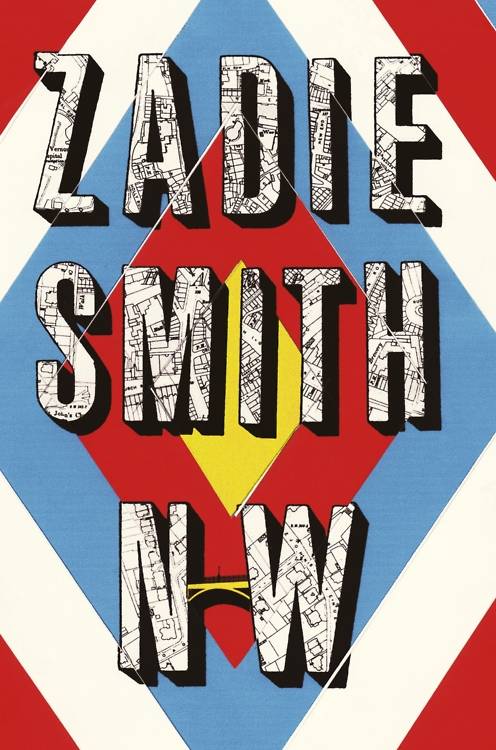
Zadie Smith | NW

Brilliant cover


"But this isn’t White Teeth. NW is in its way a magnificent read. There are passages that really do knock you out. But the author is developing a style that is far more stripped down and raw than was the case in her first book. (And I’m happy to take her word on the current London slang.)

"NW revolves around two school friends, Leah Hanwell and Natalie Blake. Leah is white and clever, but a drifter, one who was into every passing trend but now finds herself without a goal. Natalie, is mixed race, churchy, bookish and professional. She changed her name from Keisha (as Zadie herself evolved from Sadie).

"Leah and Natalie’s lives go in very different directions. Leah’s career has stalled and she and her husband Michel, a French-African hairdresser, have constant money troubles. Natalie is a successful lawyer, married to a banker, living the middle class dream existence complete with a nanny in the basement. But of course, there’s more to it than that."

--- Zadie Smith's NW, reviewed in The Big Issue, Sept 10

Wednesday, 29 August 2012

What The Family Needed | Steven Amsterdam | What's your superpower?


Given the choice, what superpower would you go for?

It's a whimsical sort of a question. The kind a kid would ask. Super strength? Mind reader? X-ray vision? So when Alek -- a young, thoughtful teen, considered a bit odd, even by those who love him -- asks it of his cousins, they don't take it that seriously.

One opts for invisibility. The other for the ability to fly.

Steven Amsterdam's new novel, What The Family Needed, is charming, light, and yet full of emotion. It keeps you guessing as to whether these special powers are real or imagined.


Each chapter focuses on a different member of an extended family at a different, crucial point in the family history. Giordana, when her mother Ruth leaves her alcoholic husband. Natalie, Ruth's sister, when her son Alek starts having trouble at school. Peter, Natalie's husband, when his wife dies suddenly.

The skips in time, the way the book manages to capture the lives of these characters in the round, using what are really quite brief vignettes, turns out to be extremely powerful. This is quite a short book, you could read it at one sitting, but it allows us to race through their lives, experiencing the characters' flaws and sharing in their joys.

The structure of the book maintains Alek's mystery until the last. Then the "reality"" of what he can do, his magical nature, is revealed. There is a chance that by including this final reveal that the book will end on a down. That the twist doesn't quite live up to the mystery. But Amsterdam's family portrait is ultimately so positive, so loving, it's impossible not to be carried away by it.

Monday, 27 August 2012

E Books | Barry Eisler and Ewan Morrison debate


This is a really entertaining debate about the whole e-book thing.

In the red corner is Barry Eisler, a big selling thriller writer who has done well out of Kindle self publishing, though he was already established with 'legacy publishing' before digital arrived.

In the blue corner is Ewan Morrison: Glasgow based author of literary fiction who has for the past year or so been railing against digital and Amazon in particular for the way it is threatening to destroy traditional publishing and destroy literary fiction.

Digital is clearly a huge change for the industry. I'm rather weary of authors bemoaning it and saying it is the work of the Devil and that the Devil's name is now Amazon.

In saying that, there are certainly challenges ahead. Not least for writers who want to make a living out of writing. Many will have to work on their writing part time. Others may be forced to give up altogether. But I'm not sure that is necessarily a bad thing.


Thursday, 23 August 2012

Hilary Mantel | Wolf Hall | BBC2 adaptation announced


The publishing world reeled with shock today as the BBC announced that it was going to turn little known author Hilary Mantel's recent, rather obscure literary novel Wolf Hall, and its sequel Bring Up the Bodies, into a hugely expensive megabudgeted costume drama.

It is undoubtedly a remarkable coup for Mantel, an author who barely ever gets talked about or mentioned in the national press. Hardly ever. Not much at all. In fact, never. [Who is she again? - ed]

Wolf Hall -- the imagined ramblings of Thomas Cromwell, Henry VIII's palace odd job man, famed for his window cleaning skills -- was released in 2009 and utterly failed to capture the public imagination despite being showered with literary awards and critical acclaim.

Readers avoided it in their droves, finding it to be "no where near as raunchy as EL James' Fifty Shades of Grey".

"Britain has moved on, we don't need to keep reexamining the past glory of Henry VIII's reign," Nobody said.

"This is a familiar tale, told with some wit but really offering nothing new to what we already know about Tudor England and the founding of the English state," Nobody added.

"This is 2012, no one is interested in monarchy anymore. We are too busy watching the Olympics. And looking at Prince Harry's bum online," Nobody pointed out.


Barbara Kingsolver | Joseph Connolly | New titles


The quality reading keeps coming.

New Connolly out on Sept 6.

Barbara Kingsolver's Flight Behaviour  on Nov 1 (pictured is the press copy).